Please note, shipping to USA currently incurs a tariff cost. This can be paid up front or to the local authority upon arrival in the USA. In practice, I have found that shipments without pre-paid tariff charges get returned to sender. Tariff costs to the USA will be calculated after purchase and invoiced separately if required.
Currently available are clones of the Marshall Supa Fuzz (similar to Tonebender MK2 pro) with Mullard OC81 transistors and a Tonebender Mk3 with Mullard OC45 and mil-spec CV7354 transistors.
The “Timbre Twister” series are clones of the various incarnations of the Tonebender fuzz pedals. These are the pedalboard friendly versions, done in hammered paint. There are many more versions and side alley’s to the Tonebender lineage, but here I am sticking to the “standard” Mk1, Mk2 amd Mk3/4 varieties. I have rolled the Mk3 and 4 into one as the originals were virtually identical.
The Mk1 was an early fuzz box, a predecessor and very close relative of the Zonk Machine. Like the Zonk Machine, it was originally made and sold in a large wedge-shaped, folded steel enclosure, and also like the Zonk Machine, the circuit was difficult to tune, so was produced in very small numbers and soon updated to the much more common MkII Pro.
The raw vintage distortion, bags of sustain and controllable, musical feedback provided by the MkI made it a favourite of players such as Mick Ronson and Jeff Beck, and with good reason. A well-made MkI Tonebender is a joy to play.
The Mk1.5 Tonebender was produced during 1965/66 and is virtually identical, schematic wise. to the Arbiter Fuzz Face.
The MkII was perhaps most famously used by Jimmy Page, possessing a sound somewhere between fuzz and overdrive, and it is not typically gated like the MkI.
The MkIII/IV has quite a different circuit again, adding a very effective tone control to the mix. Other famous variants of this circuit are the Park Fuzz and Prescription Electronics Yard Box.
I build these pedals onto hand-wired eyelet or strip boards and most versions have one or two trim pots that allow the user to compensate for temperature changes, which can affect the bias.
The lettering is hand-applied using vintage Letraset dry transfer, which like the very first units, is then varnished for protection.
The pedals all have have positive ground and run off battery or 9v A/C adapter.
Please note, shipping to USA currently incurs a tariff cost. This can be paid up front or to the local authority upon arrival in the USA. In practice, I have found that shipments without pre-paid tariff charges get returned to sender. Tariff costs to the USA will be calculated after purchase and invoiced separately if required.
Currently available are clones of the Marshall Supa Fuzz (similar to Tonebender MK2 pro) with Mullard OC81 transistors and a Tonebender Mk3 with Mullard OC45 and mil-spec CV7354 transistors.
The “Timbre Twister” series are clones of the various incarnations of the Tonebender fuzz pedals. These are the pedalboard friendly versions, done in hammered paint. There are many more versions and side alley’s to the Tonebender lineage, but here I am sticking to the “standard” Mk1, Mk2 amd Mk3/4 varieties. I have rolled the Mk3 and 4 into one as the originals were virtually identical.
The Mk1 was an early fuzz box, a predecessor and very close relative of the Zonk Machine. Like the Zonk Machine, it was originally made and sold in a large wedge-shaped, folded steel enclosure, and also like the Zonk Machine, the circuit was difficult to tune, so was produced in very small numbers and soon updated to the much more common MkII Pro.
The raw vintage distortion, bags of sustain and controllable, musical feedback provided by the MkI made it a favourite of players such as Mick Ronson and Jeff Beck, and with good reason. A well-made MkI Tonebender is a joy to play.
The Mk1.5 Tonebender was produced during 1965/66 and is virtually identical, schematic wise. to the Arbiter Fuzz Face.
The MkII was perhaps most famously used by Jimmy Page, possessing a sound somewhere between fuzz and overdrive, and it is not typically gated like the MkI.
The MkIII/IV has quite a different circuit again, adding a very effective tone control to the mix. Other famous variants of this circuit are the Park Fuzz and Prescription Electronics Yard Box.
I build these pedals onto hand-wired eyelet or strip boards and most versions have one or two trim pots that allow the user to compensate for temperature changes, which can affect the bias.
The lettering is hand-applied using vintage Letraset dry transfer, which like the very first units, is then varnished for protection.
The pedals all have have positive ground and run off battery or 9v A/C adapter.
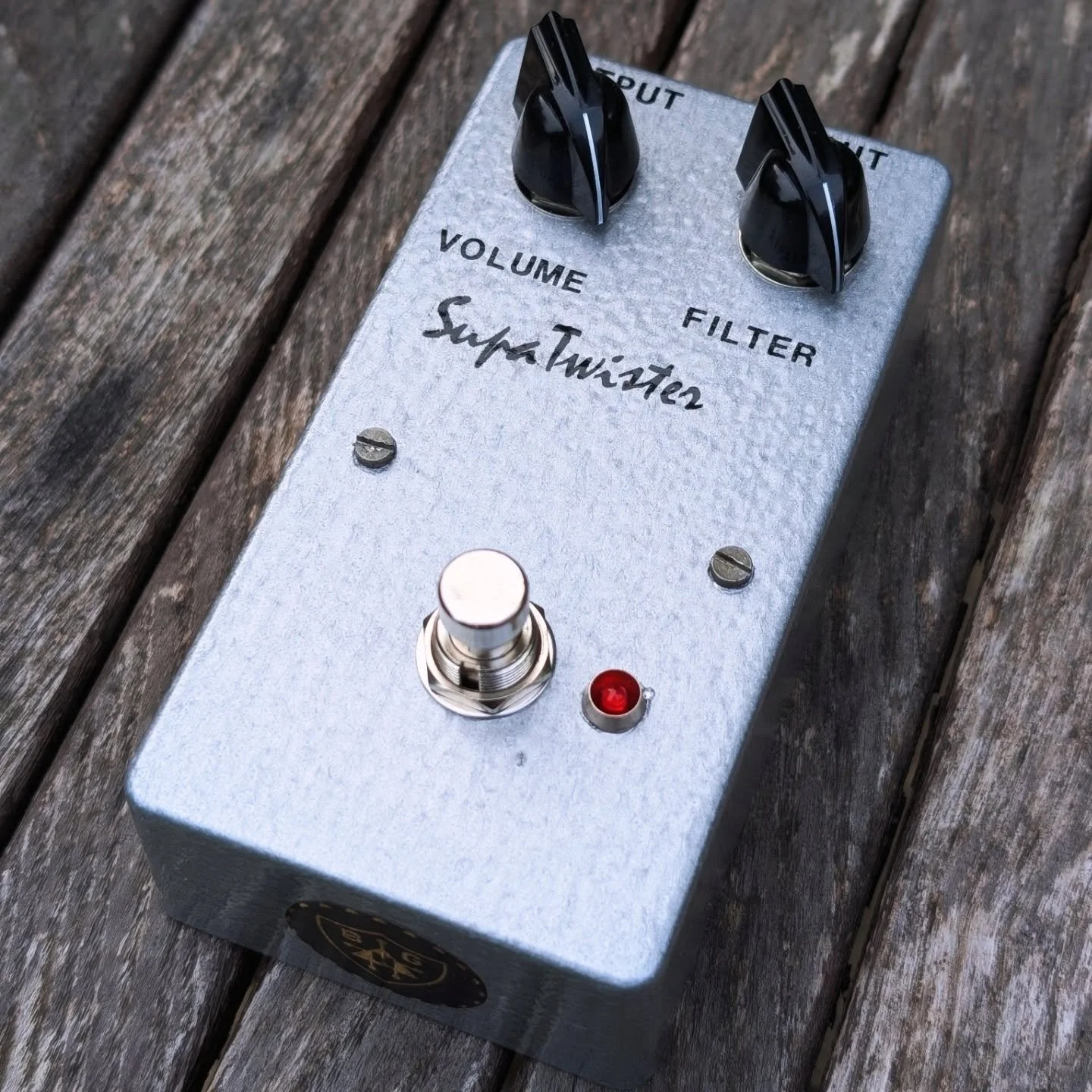 Image 1 of 23
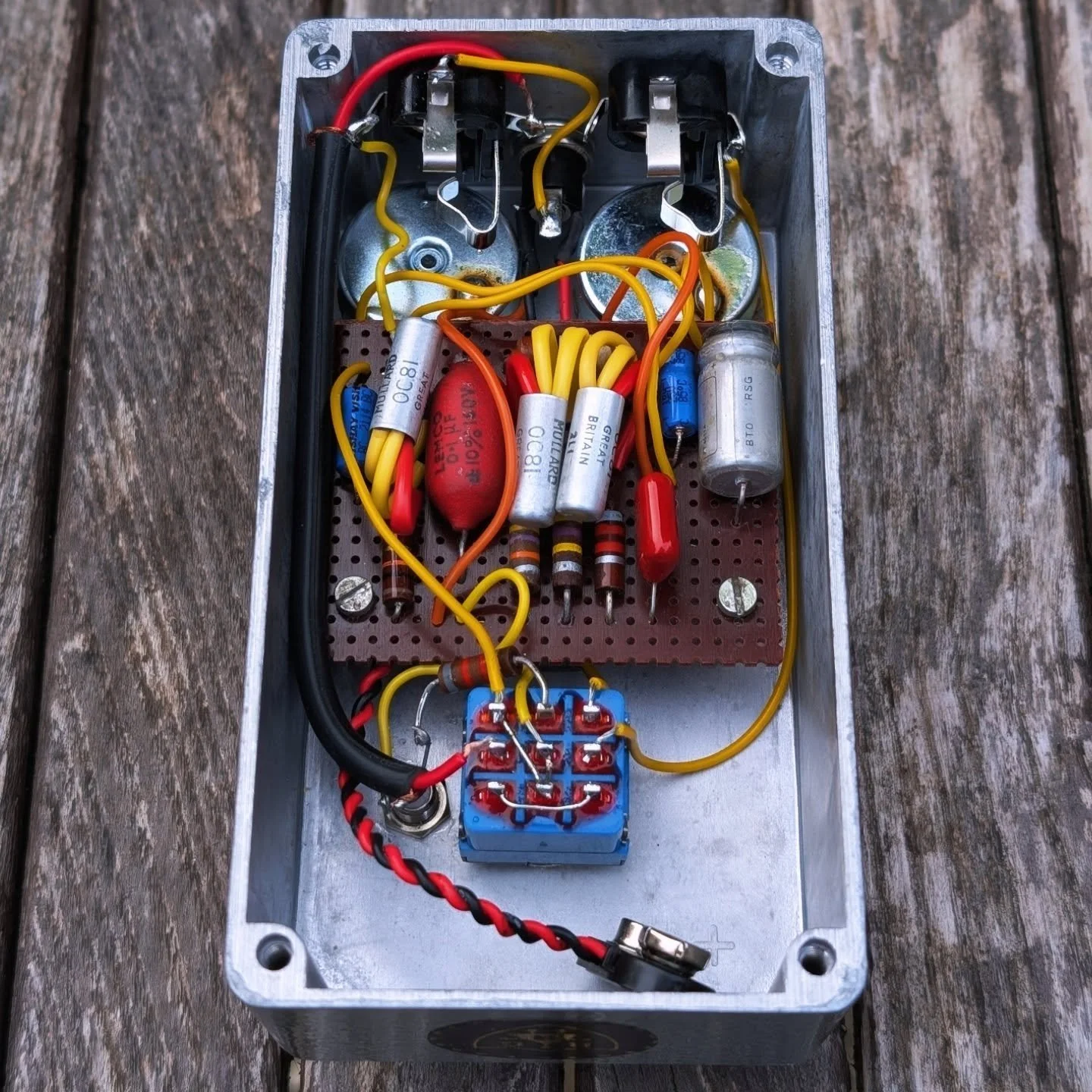 Image 2 of 23
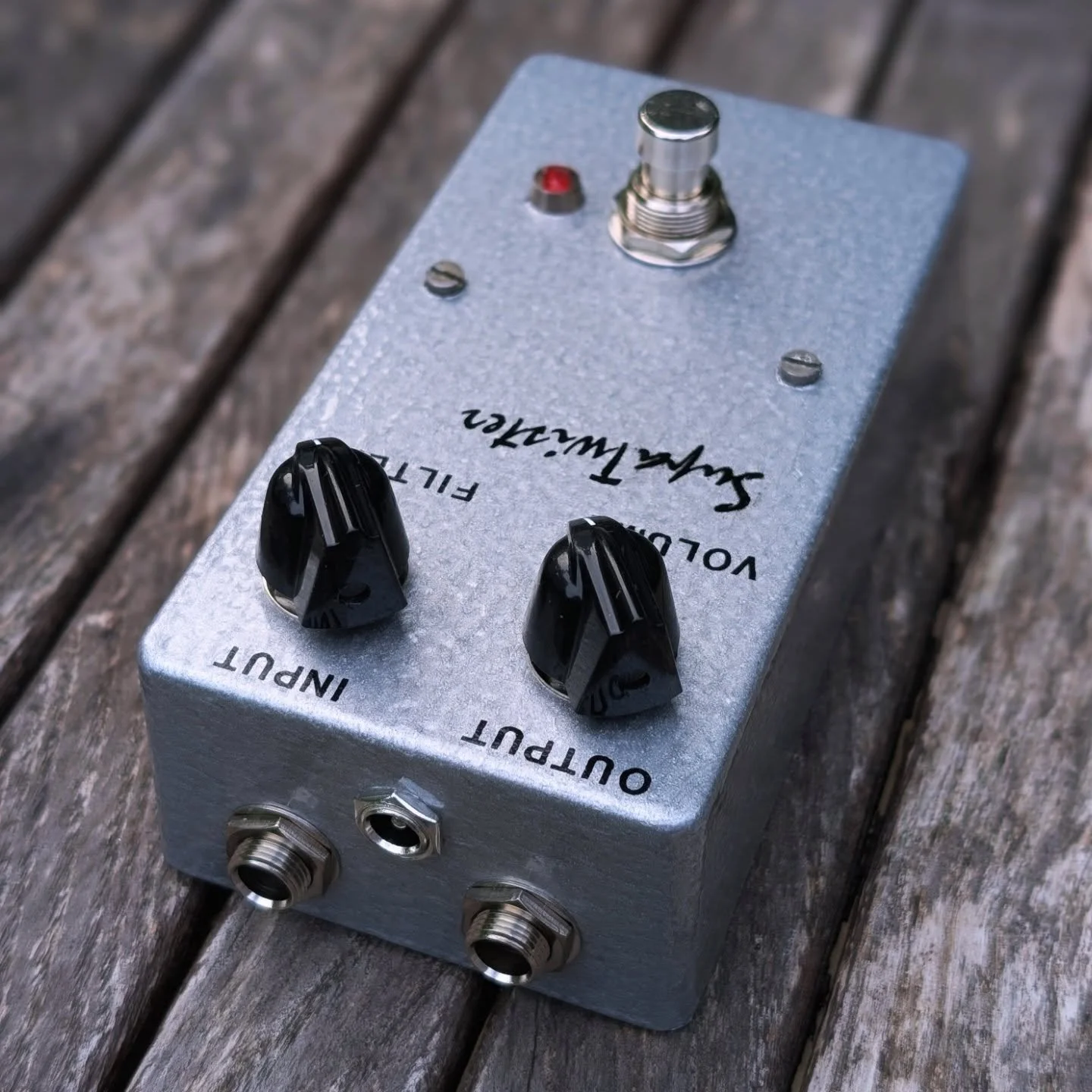 Image 3 of 23
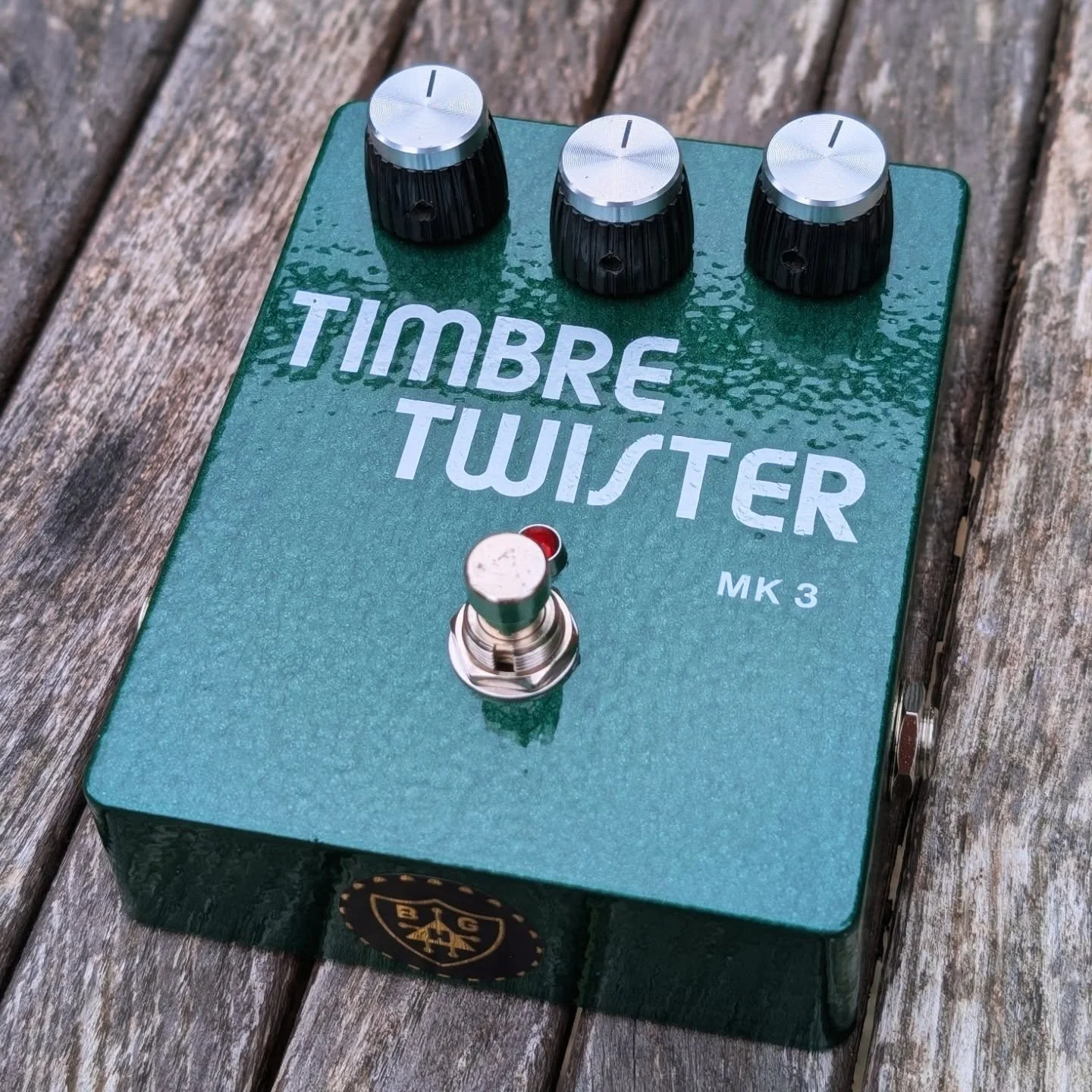 Image 4 of 23
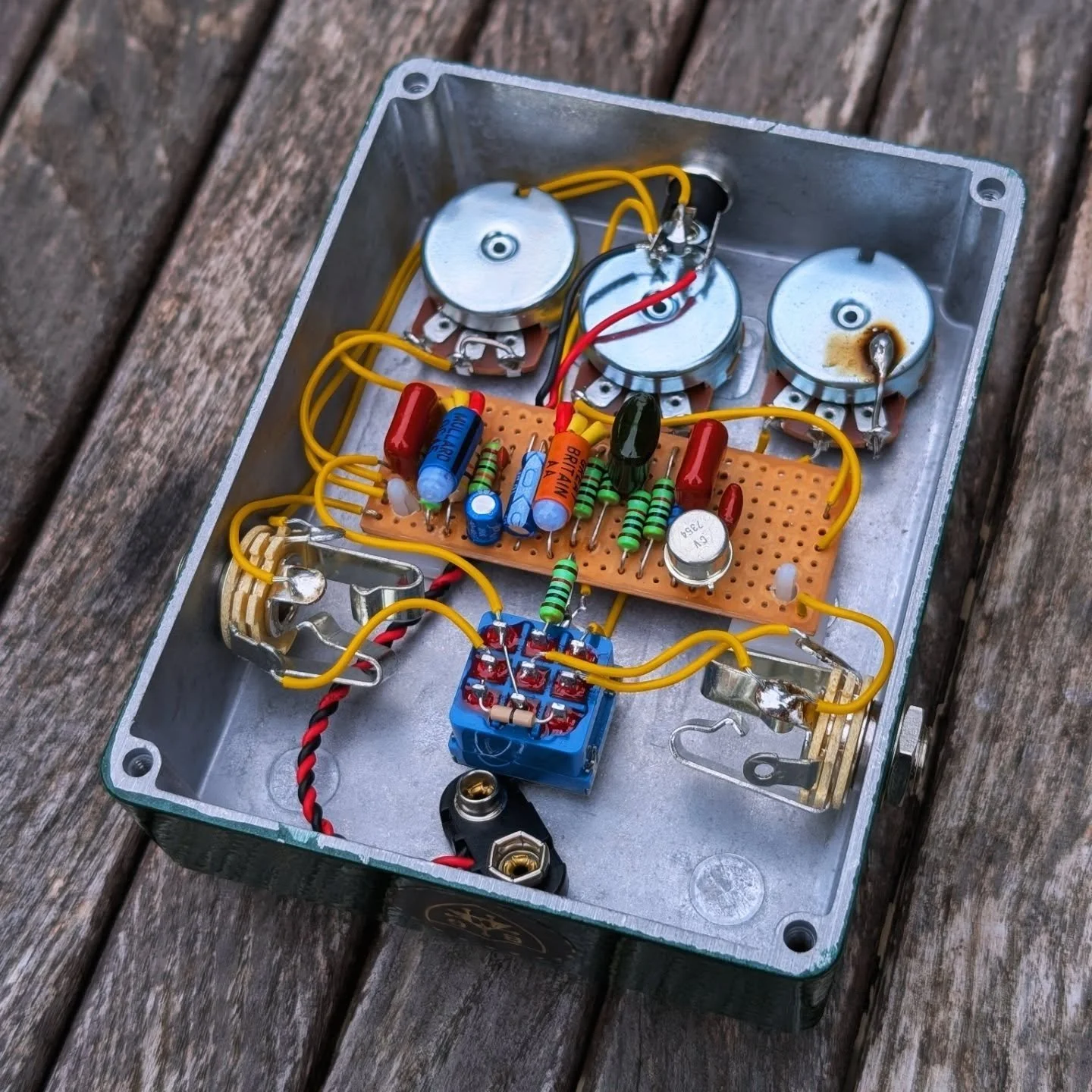 Image 5 of 23
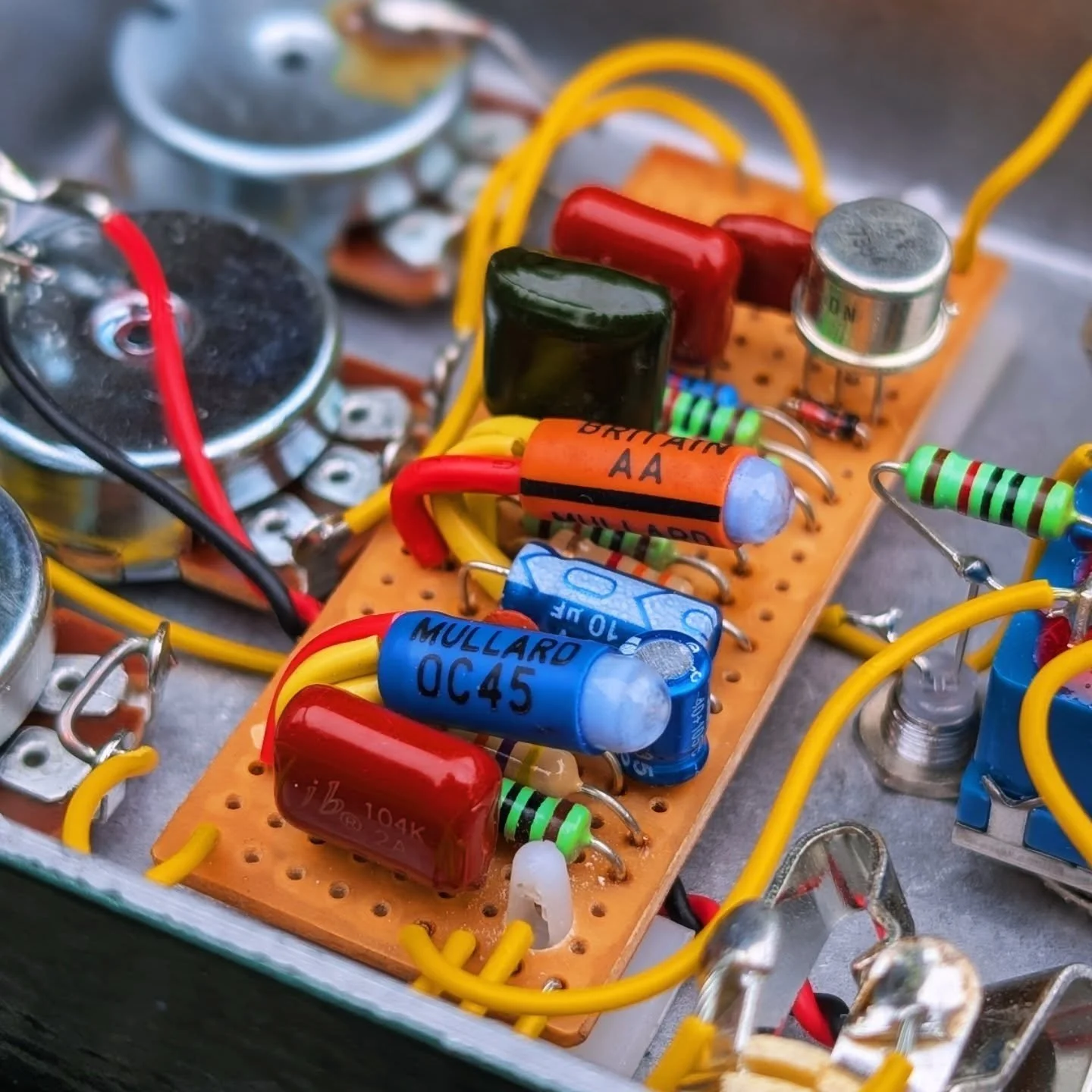 Image 6 of 23
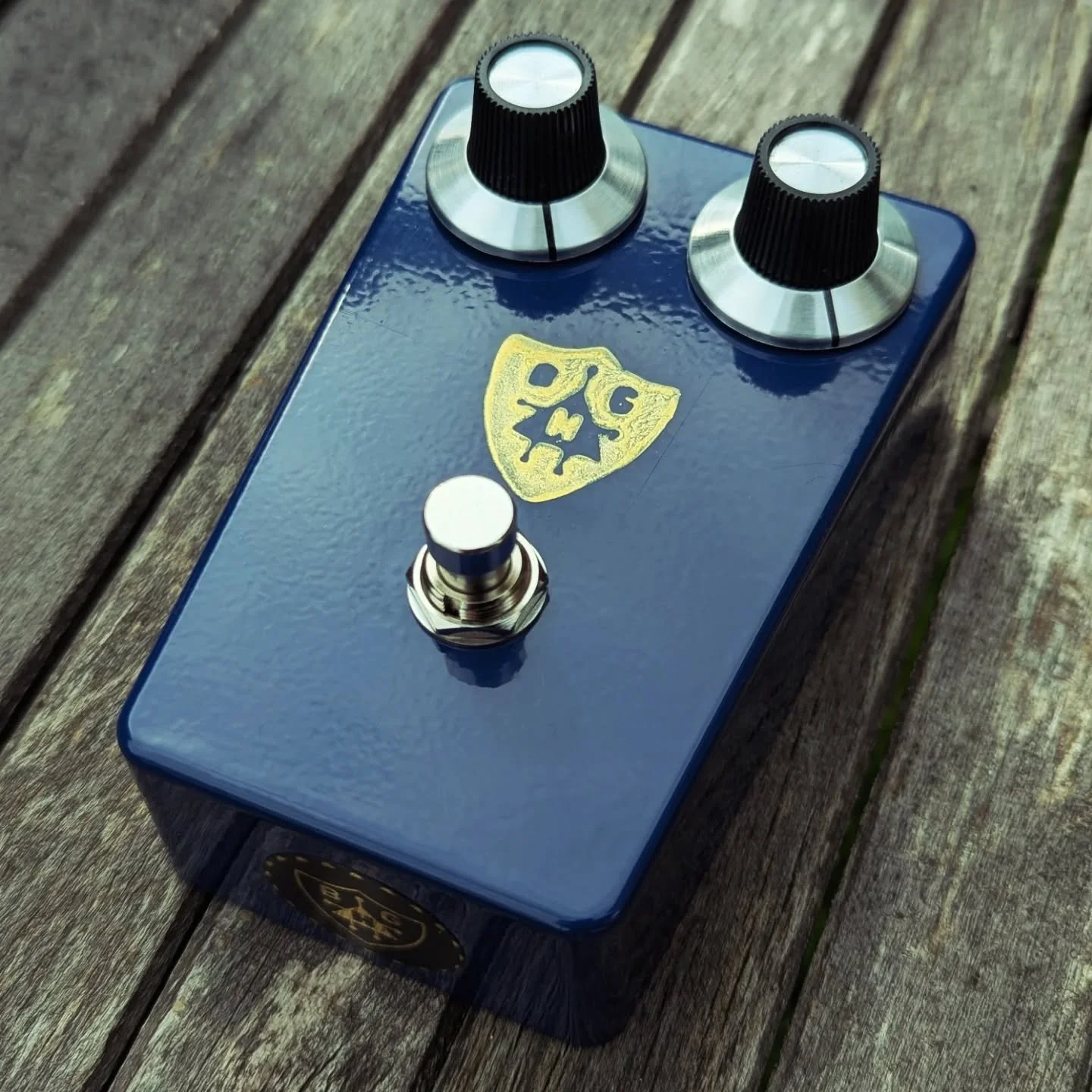 Image 7 of 23
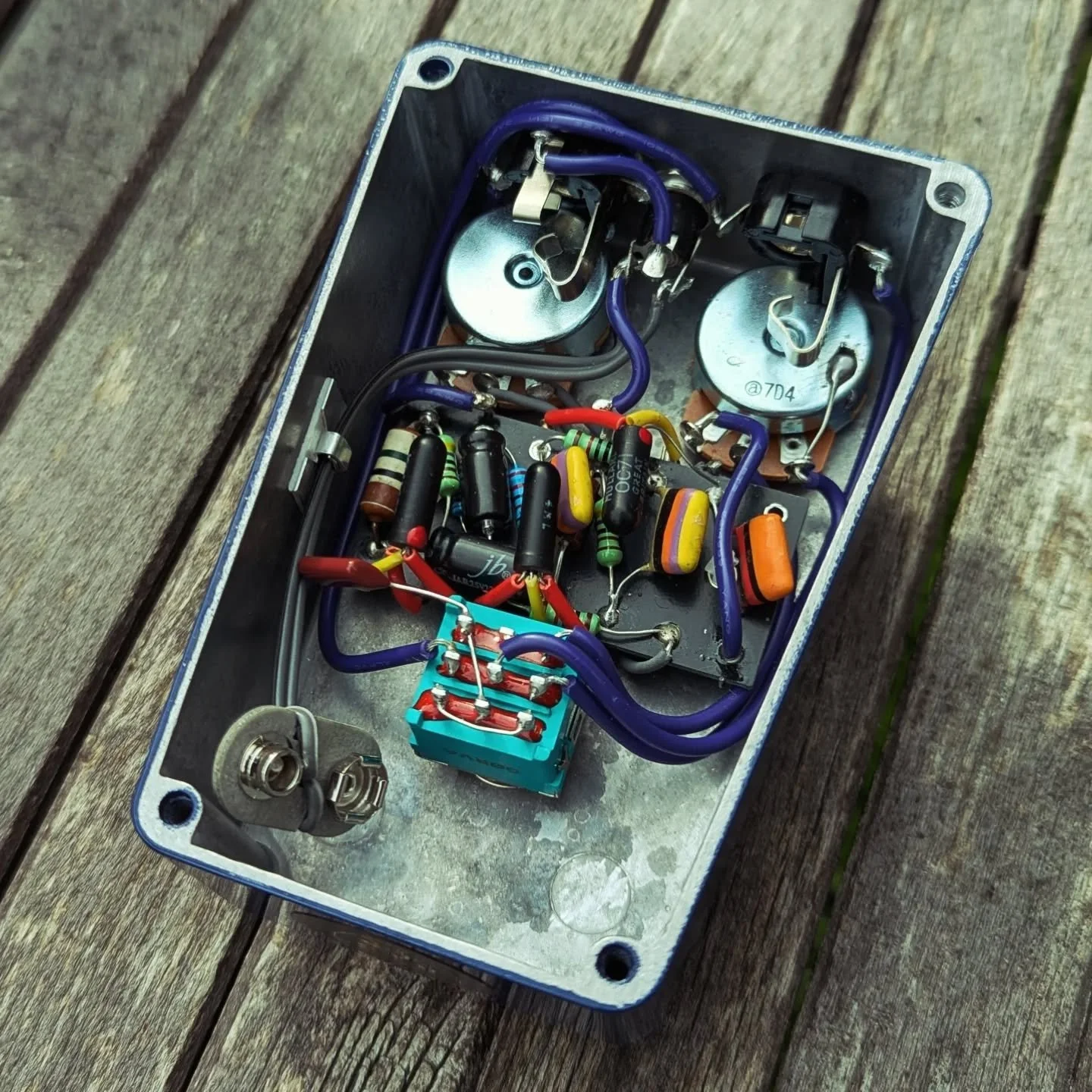 Image 8 of 23
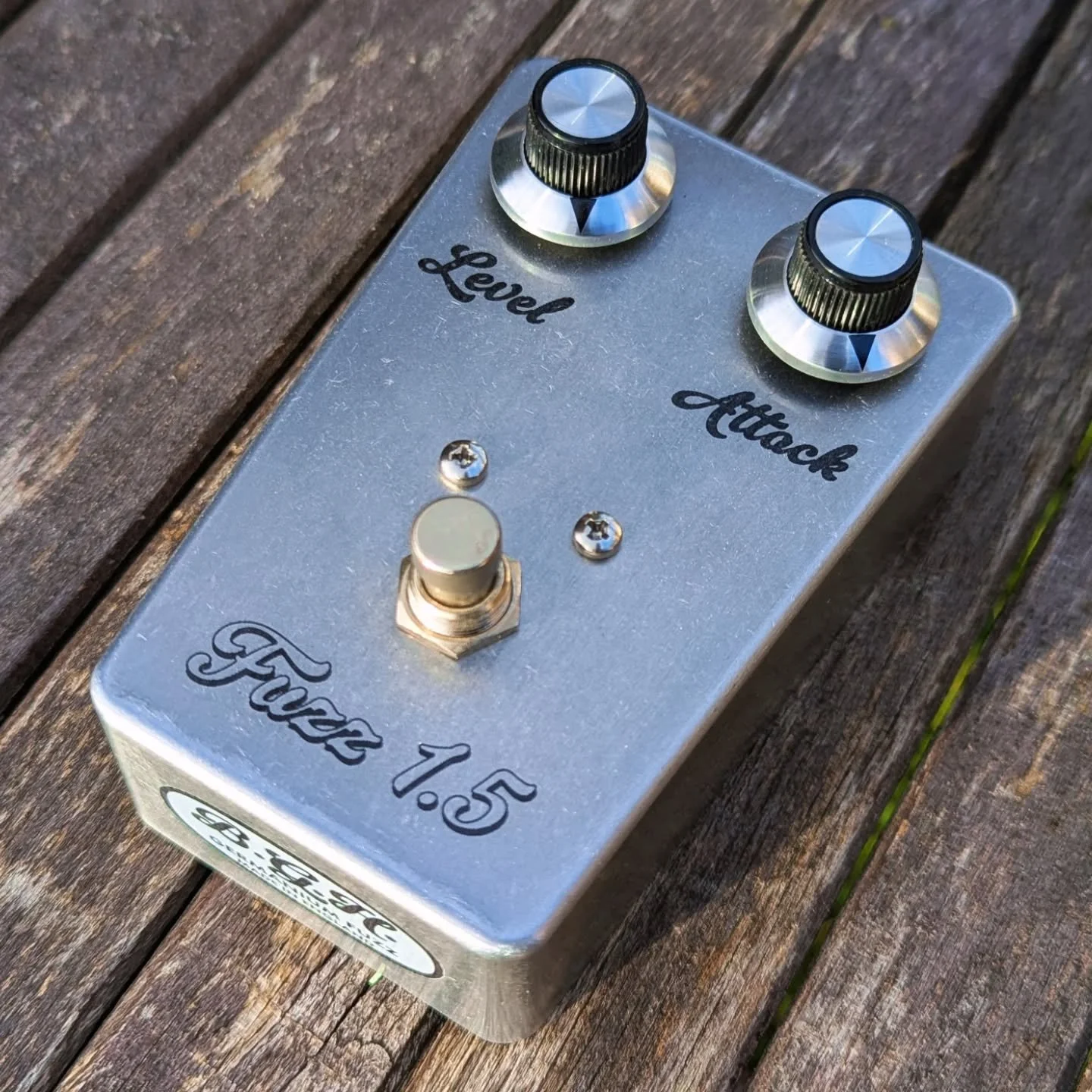 Image 9 of 23
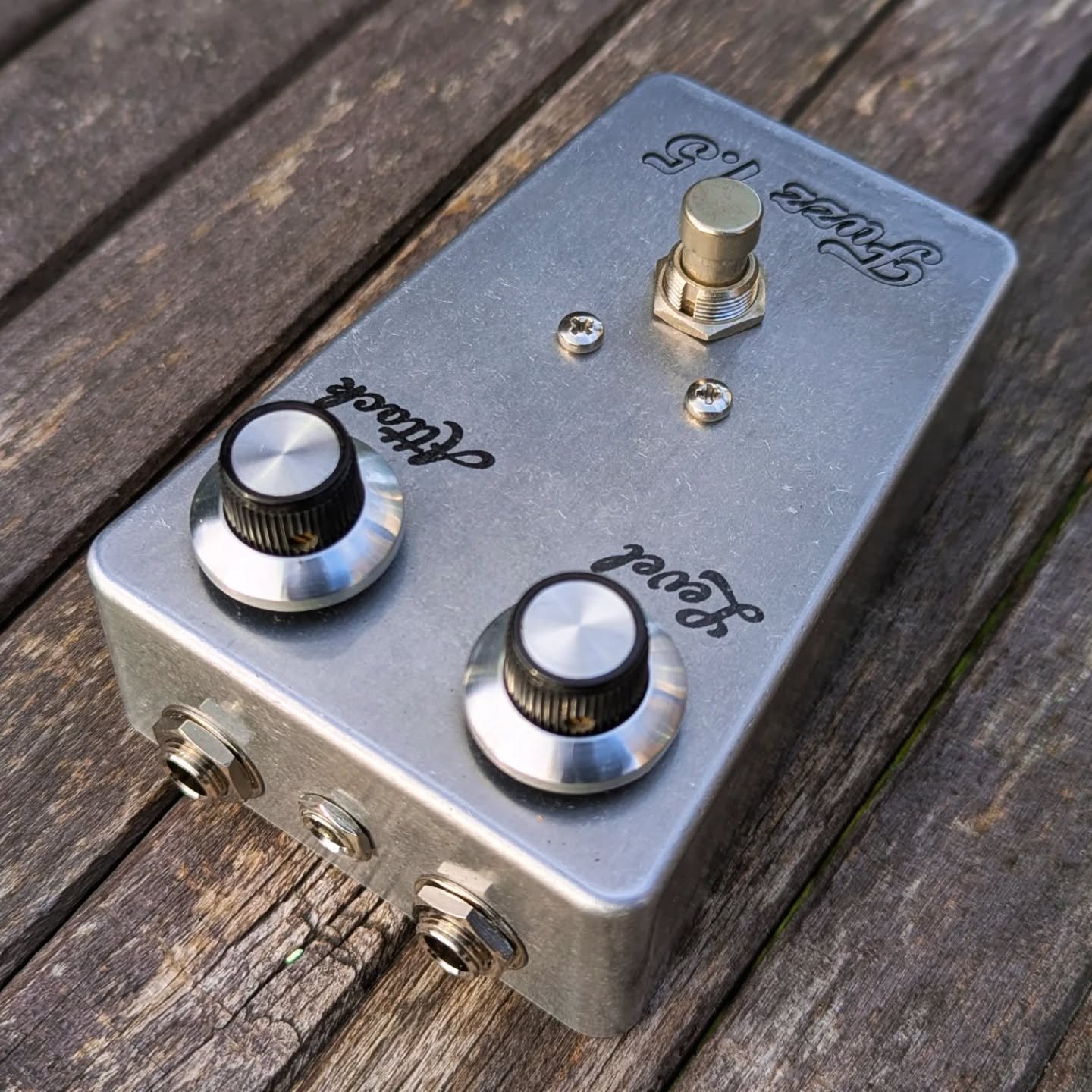 Image 10 of 23
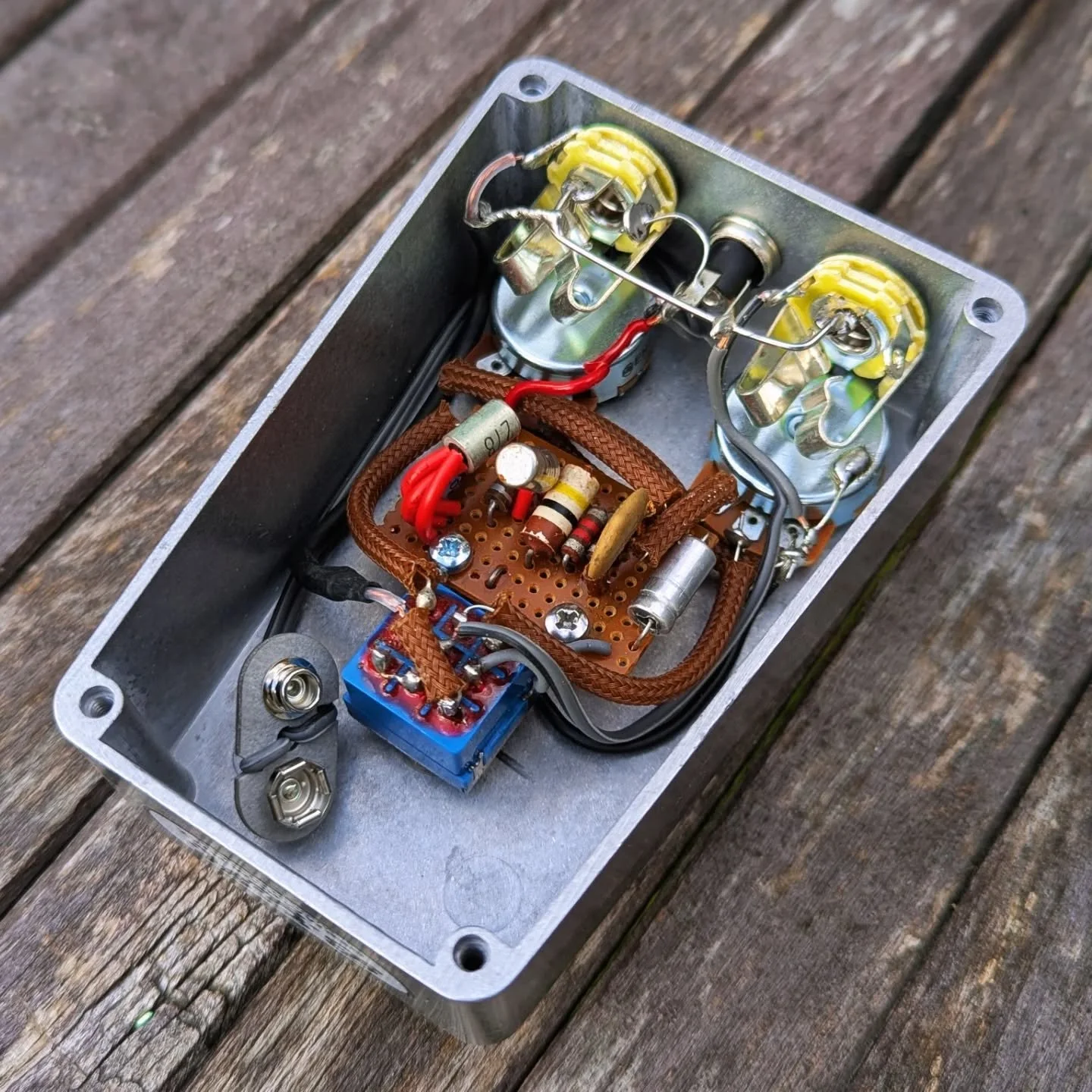 Image 11 of 23
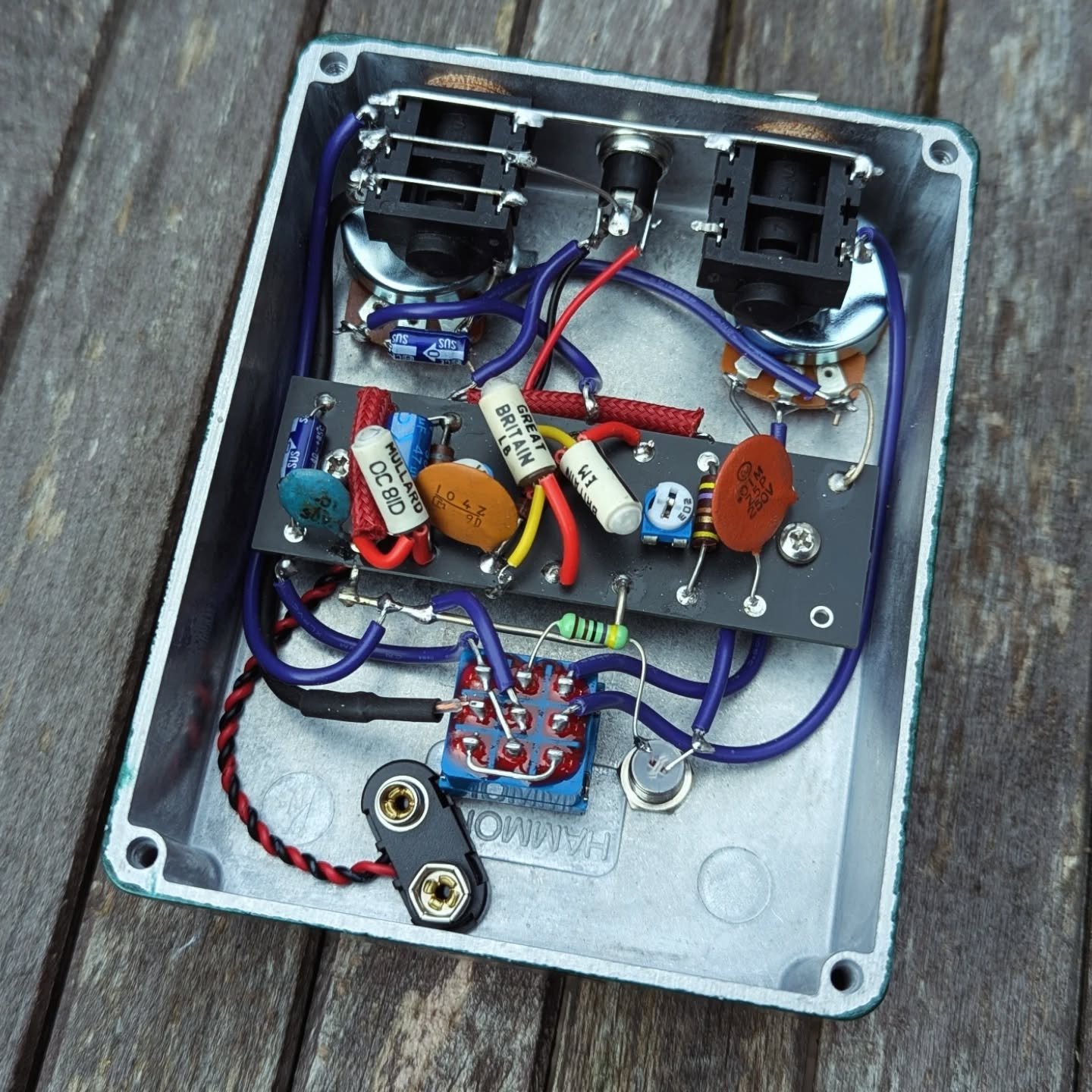 Image 12 of 23
 Image 13 of 23
 Image 14 of 23
 Image 15 of 23
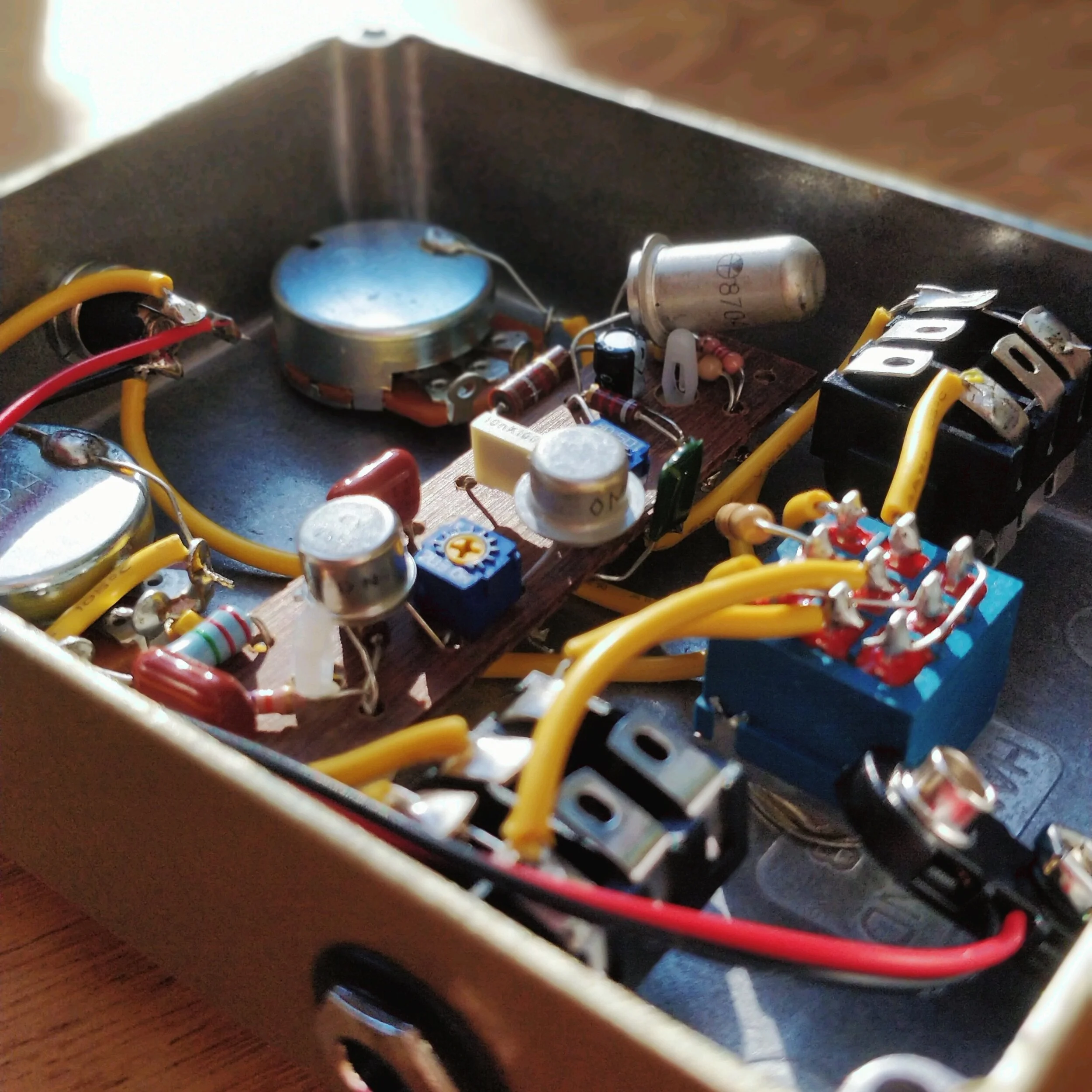 Image 16 of 23
 Image 17 of 23
 Image 18 of 23
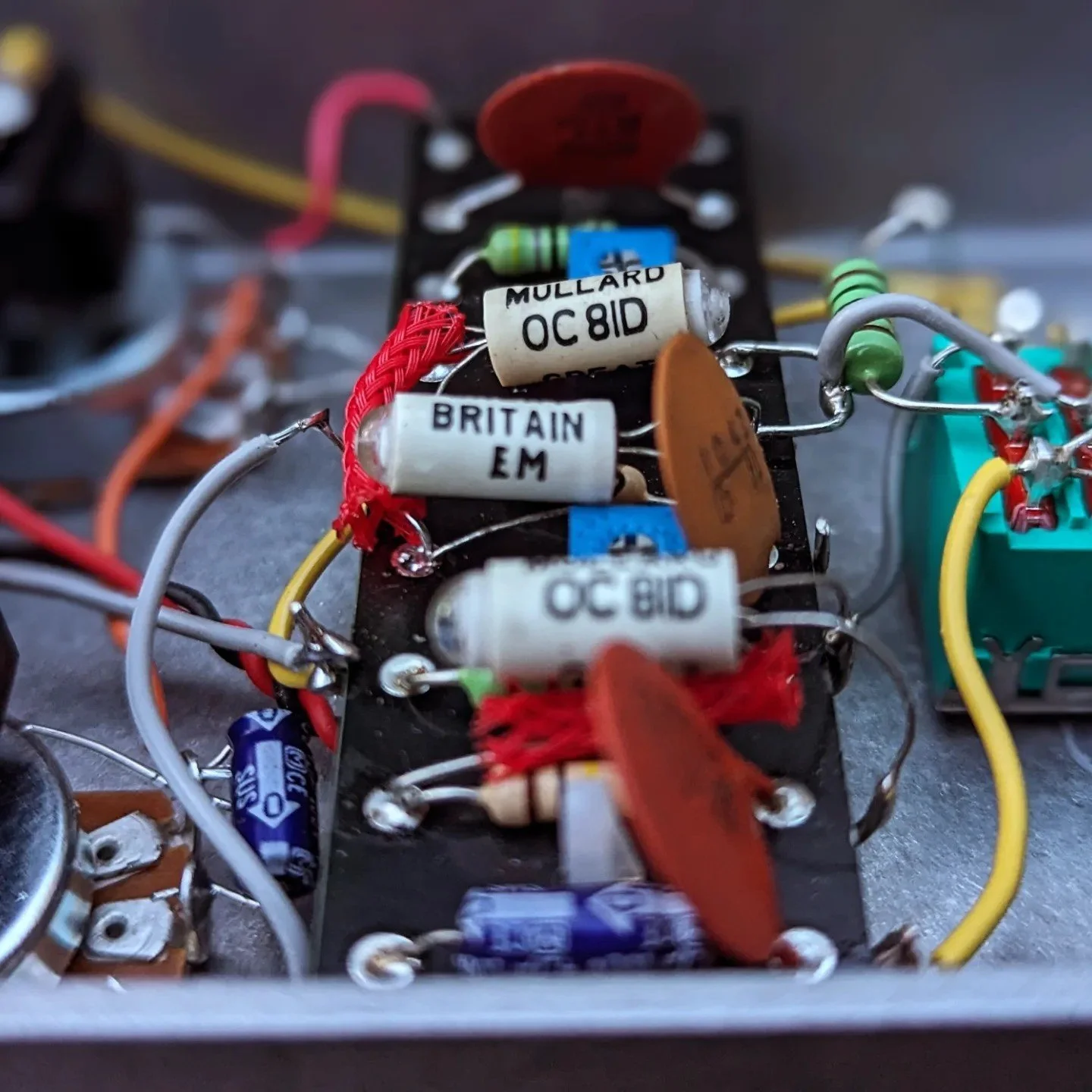 Image 19 of 23
 Image 20 of 23
 Image 21 of 23
 Image 22 of 23
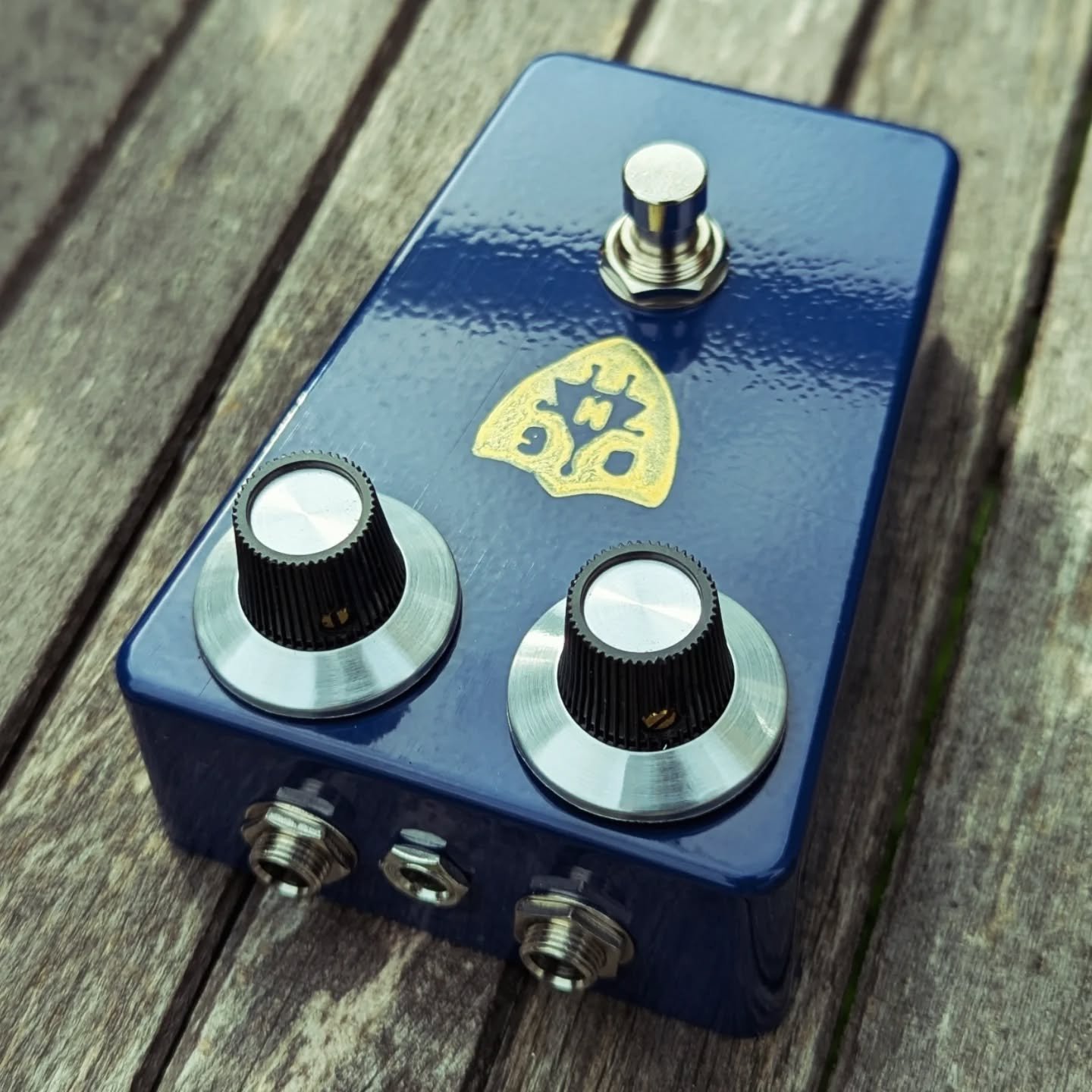 Image 23 of 23